LEADS Institute · Education and training
Work out what to try
Bring a difficult decision into a design studio. Your team learns to question assumptions, develop alternatives and test its reasoning.
Explore Emergent Transformative Design →
Veteran-owned consulting firm
Walter L. Christman, PhD, brings a 30-year career in U.S. military and civilian government service to consulting, research and education.
LEADS Institute · Education and training
Bring a difficult decision into a design studio. Your team learns to question assumptions, develop alternatives and test its reasoning.
Explore Emergent Transformative Design →Global Strategic Analysis · Consulting and research
Bring the organizations that share a problem together. Establish who can decide, what each will contribute and how they will judge a pilot.
Explore partnership development → · Read the concept paper →Need both? Carry the design team’s concept into a partner decision, or bring an implementation question back to the studio.
See how the two engagements connect →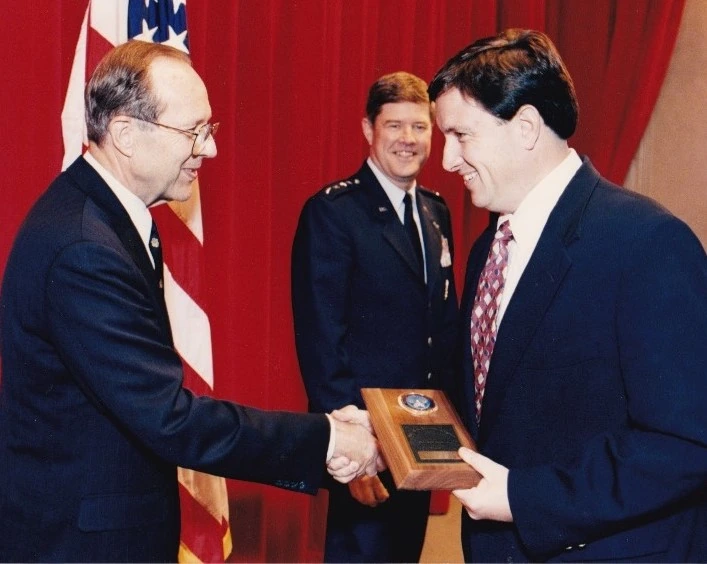
Secretary of Defense William Perry presents an award to Walter Christman.
Narrated introduction
Six chapters follow Walter from public service into the design classroom and consulting practice, with archival photographs, an AI narrator and an original score.
Watch the film Download the narrated film (MP4)Global Strategic Resources is the veteran-owned consulting and research practice Walter Christman built after retiring from thirty years of U.S. government service. He served in Army Special Forces and as a civilian in the Defense Department. His assignments took him to Congress, the Pentagon, the State Department, and the White House. His final government post was on the faculty of the Naval Postgraduate School, where he taught strategic leadership in a globalizing world. Walter was the principal architect of seven initiatives for the Secretary of Defense. Three of those initiatives received presidential endorsement. He holds a Master of Public Administration from Harvard and a Master of International Affairs from Columbia. Walter spent twelve years as a U.S. diplomat in the international community in Geneva, Switzerland. While there, he earned his doctorate in international relations from the University of Geneva. He has also lived in Riyadh and Manila, and brings experience in nearly sixty countries to his work. Its two branches answer different questions. Through Global Strategic Analysis, clients commission research and advice about a decision they face. Through the LEADS Institute, their teams learn how to work through that decision together.
In Riyadh, Walter served as a senior advisor on Booz Allen Hamilton’s team at the Saudi Armed Forces Command and Staff College. He led a strategic evaluation as the college prepared to become a national defense university. During that Booz Allen assignment, the college’s journal published his 2020 article on design thinking for defense transformation. In a separate engagement for KPMG, he contributed regulatory analysis to an industry bid. He also wrote three papers on technology priorities, artificial intelligence, and the risks of dependence on digital systems.
For Sweden’s 4C Strategies, Walter examined how international civilian and military partners could learn more from the VIKING exercise. His Joint Special Operations University Press paper proposed a consortium through which educators and researchers across countries could share their work. In 2022, Walter and Major General Mohammad Farghal prepared an unsuccessful bid for prospective defense-industry advisory work in Iraq through PKF. Global Strategic Analysis offers two ways to work with partners. Its Partnership Design Council helps partners agree on the problem and the commitments each can make. Its Partnership Implementation Lab helps them put those commitments into practice.
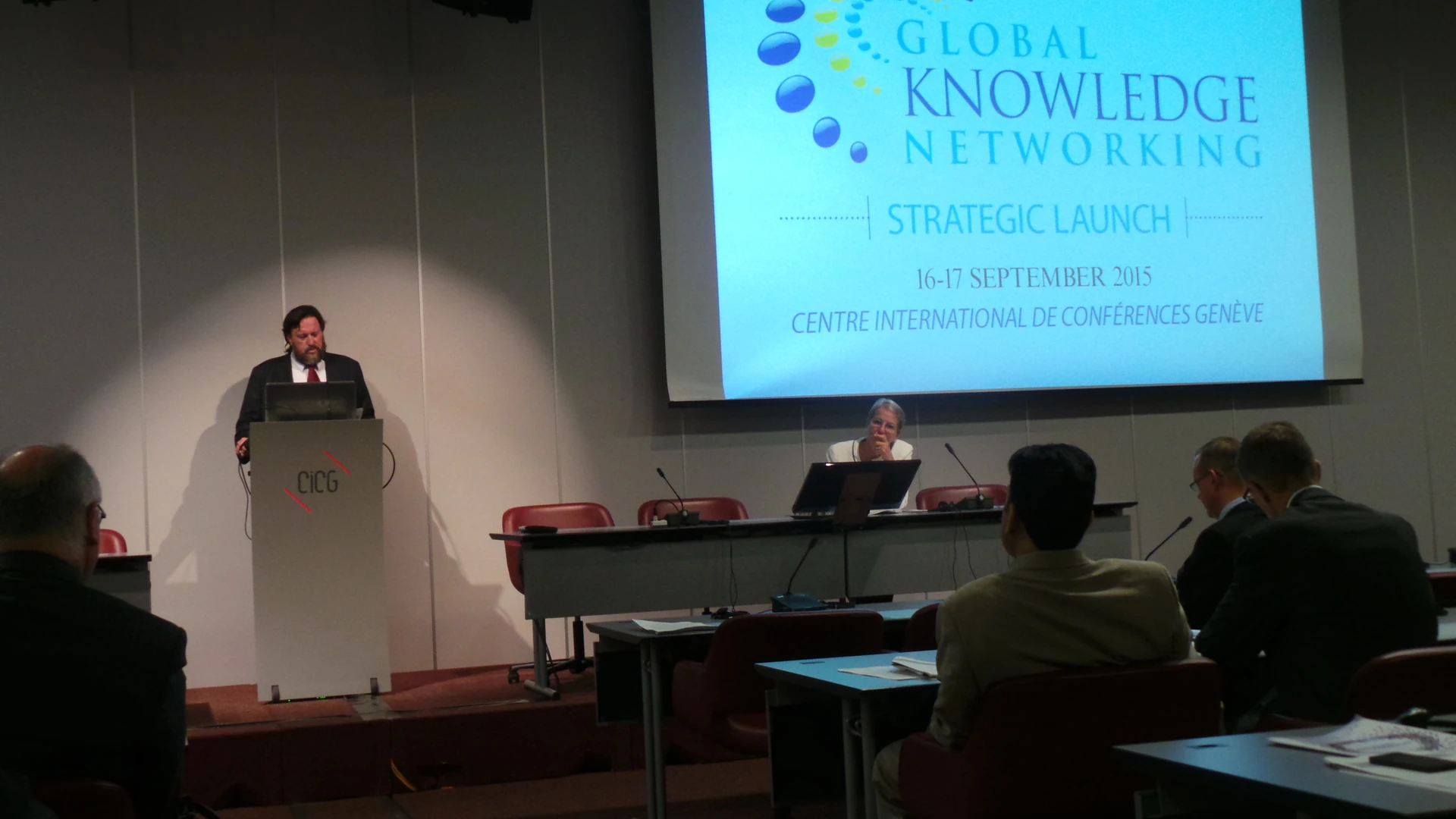
Under a Booz Allen subcontract supporting the Office of the Secretary of Defense, Walter led a team developing a roadmap for sharing knowledge across institutions. In September 2015, the Geneva Declaration launched the Global Resilience Readiness Initiative. Walter’s trilogy, The Age of Convergence, traces what followed, including a youth leadership initiative launched in Geneva in 2019. Its Covenant Table brings decision makers together with people who know the issue and people who will live with the decision.
The LEADS Institute teaches Emergent Transformative Design. Its four original application domains were Energy Security, Cyber Security, Border Security, and Maritime Security. The standard program opens with a two-day seminar. A five-day design studio follows. Teams then return for two days to revise their work in light of experience. The 2017 U.S. Cyber Command engagement, funded through Constellation West, took a different form. Walter led the faculty effort to develop and deliver a ten-day course. Through GSR, he also served as adjunct faculty at Joint Special Operations University. He taught with faculty teams at Fort Bragg and Hurlburt Field. In Tampa, he co-taught a design pilot for twenty-five Saudi Ministry of Interior officers.
Organizations can commission Global Strategic Analysis consulting and LEADS education independently. A Design-to-Delivery Brief connects the two in either direction. A LEADS team can take a design to the Council or Lab to put it into practice. The Council or Lab can also put a learning need in the brief for LEADS to address. Through Global Challenges Forum USA, LEADS also supports institutional research partnerships and publishing. Explore the projects here. For his biography, the story behind the Riyadh portrait, and a fuller account of his life’s work, visit walterchristman.com.
Founder and principal
Walter came to consulting after a 30-year career in U.S. military and civilian government service. He began in Army Special Forces and retired from the faculty of the Naval Postgraduate School. His assignments took him to Congress, the Pentagon, the State Department and the White House. He also served for twelve years as a U.S. diplomat in the international community in Geneva, Switzerland, where he earned his PhD in international relations.
He was the principal architect of seven Secretary of Defense initiatives. Three received presidential endorsement. He has lived in Geneva, Riyadh and Manila and brings experience in nearly 60 countries to his work.
Public service and academic career →For a fuller account of his life’s work, visit WalterChristman.com ↗.
The practice
Examine a decision and the evidence it rests on. Read original work on defense education, institutional change and international cooperation.
Read the research →Work with the people who know an institution from different sides. In Riyadh, that began with the leaders of a college preparing to become a university.
The Riyadh assignment →Bring a real organizational question into a design studio. Practitioners develop a response and revisit it after testing their assumptions.
The 2–5–2 design method →Featured research
An OSD research commission led to a roadmap. A conference in Geneva produced a declaration. Read the original record and follow what the trilogy says grew from it.
Explore the project →